

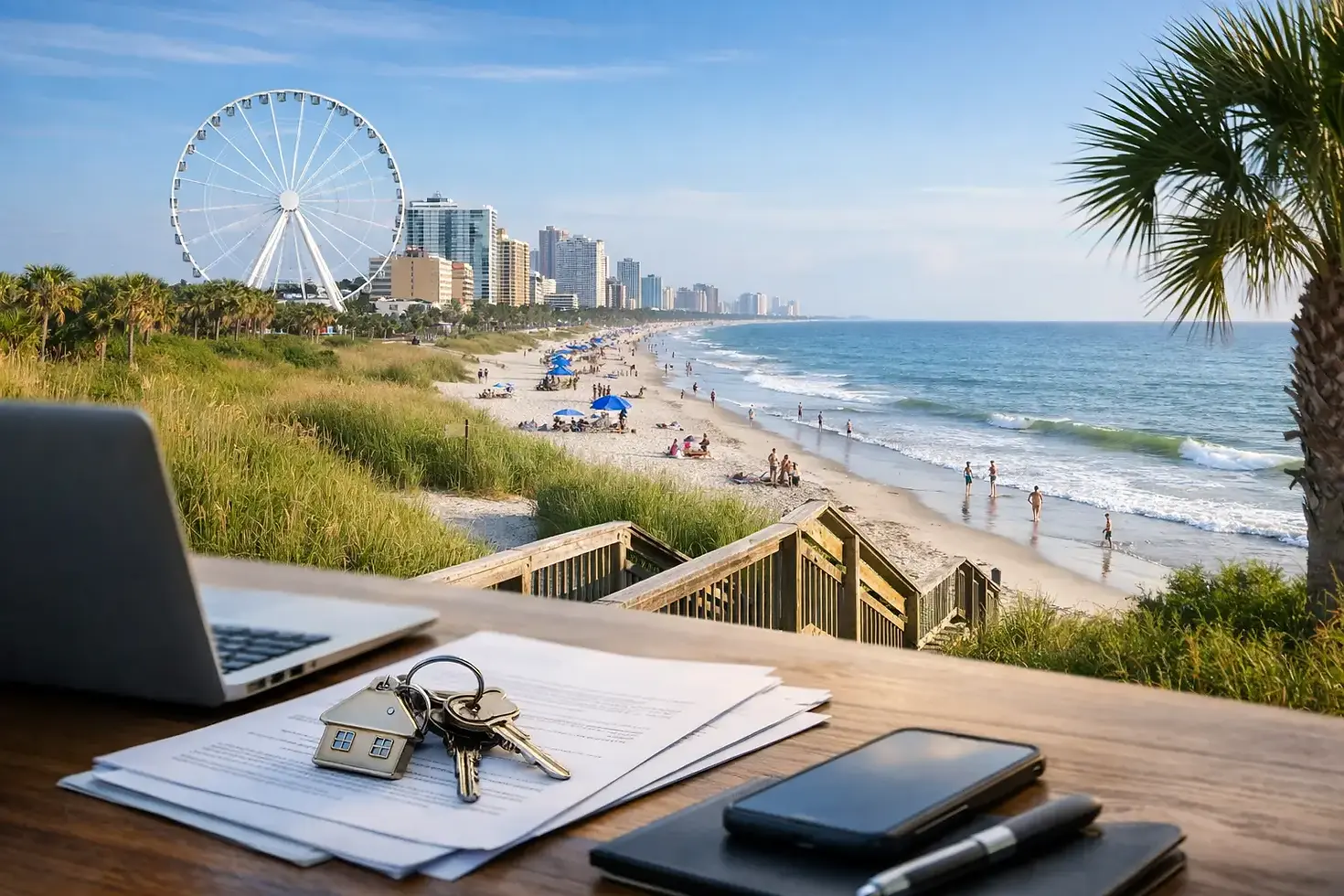
Relocating to Myrtle Beach SC: What to Know
Some moves are about square footage. Others are about changing how you live. If you're relocating to Myrtle Beach SC, you're probably thinking about more than the house itself. You may be looking for easier access to the beach, a lower-maintenance lifestyle, a golf community, a boating area, or simply a place that feels less rushed and more livable day to day.
That is where many buyers get tripped up. Myrtle Beach is not one single experience. The Grand Strand includes distinct communities, price points, traffic patterns, and lifestyle differences that matter once the excitement of the move wears off. A home that looks perfect online can feel very different once you factor in commute time, visitor traffic, HOA rules, flood zones, or how close you really want to be to the heart of the action.
Relocating to Myrtle Beach SC starts with the area
One of the biggest mistakes buyers make is searching by home first and area second. In this market, that order should usually be reversed. The right neighborhood can make an average house feel like the right move. The wrong location can make even a beautiful home feel inconvenient.
Myrtle Beach itself appeals to buyers who want to be near restaurants, entertainment, shopping, and the oceanfront energy that draws so many people here. It can be a strong fit if you want convenience and don’t mind a busier setting. If you prefer something a little quieter but still close to the beach, Surfside Beach often stands out for its more residential feel.
Murrells Inlet attracts buyers who want a different pace, especially those drawn to marsh views, boating, seafood, and a more laid-back coastal atmosphere. North Myrtle Beach tends to be popular with buyers who want beach access but also value a broader mix of residential communities, golf, and established neighborhoods. Conway is often the conversation when buyers want more land, a different price point, or a setting that feels less tourism-driven.
Little River, Longs, and Pawleys Island each serve a different kind of buyer. Some want a quieter waterfront lifestyle. Others want newer construction, more space, or a location slightly removed from peak beach traffic. The point is simple: relocating well means matching your daily routine to the right part of the Grand Strand.
Budgeting for more than the purchase price
Many relocating buyers come in with a rough purchase budget and a monthly payment target. That is a good starting point, but it is not enough. Coastal markets have added variables, and overlooking them can create frustration fast.
Property taxes, homeowners insurance, and flood insurance can shift the real monthly cost in a meaningful way. HOA fees also vary widely depending on the community and amenities. A neighborhood with a pool, gated access, lawn care, and exterior maintenance may make life easier, but it also changes your carrying costs.
The trade-off is worth it for many buyers, especially retirees or second-home owners who want convenience. For others, a lower-fee or no-fee community may be the better fit. It depends on whether you value simplicity, privacy, amenities, or flexibility most.
If you are moving from a higher-cost market, Myrtle Beach may look very affordable at first glance. In many cases, it is. But smart relocation planning means comparing total ownership costs, not just list prices.
What daily life really feels like
A lot of people fall in love with Myrtle Beach while visiting, and for good reason. But living here full-time is different from spending a long weekend here. That difference is not bad - it just needs to be understood.
Traffic patterns change by season. Some areas feel quiet in one month and much busier in another. Proximity to the beach can be a huge plus, but if you need frequent access to medical offices, schools, grocery stores, or major roads, convenience matters just as much as scenery.
If you work remotely, your priorities may center on internet reliability, neighborhood quiet, and access to daily essentials. If you are retiring, you may be more focused on social activities, golf, healthcare, and whether a one-level home makes long-term sense. If you are moving with children, school zones, community layout, and drive times quickly move to the top of the list.
This is why relocation is rarely just about finding a good home. It is about understanding how your life will function once the boxes are unpacked.
New construction or resale?
For buyers relocating to Myrtle Beach SC, this is often one of the first major decisions. New construction is appealing because everything is fresh, floor plans are current, and many communities offer amenities that fit a resort-style or low-maintenance lifestyle. Buyers also like the idea of fewer immediate repairs.
Still, new construction is not automatically the better option. Some buyers are surprised by lot size, upgrade costs, build timelines, and the fact that a base price does not always reflect the final number. In some communities, you may also be living in an active construction area for a while.
Resale homes can offer more established neighborhoods, mature landscaping, and in some cases a better location for the price. You may also get features that would cost extra in a new build. The trade-off is that age, condition, and future maintenance need to be evaluated carefully.
There is no one-size-fits-all answer here. The best choice depends on your timeline, your budget flexibility, and how much certainty you want before the move.
Timing matters more than most people expect
If you are relocating from out of state, the timeline can become the hardest part. You may be coordinating a sale elsewhere, a job change, school enrollment, or a lease ending. That makes planning essential.
A rushed move usually narrows your options. A move with too much delay can create a different problem if prices shift or inventory changes in your preferred area. Buyers often benefit from deciding early what matters most: closing speed, neighborhood choice, home condition, or price.
That clarity helps you act decisively when the right property shows up. In a market like this, hesitation can cost you the house you wanted, but moving too fast without understanding the area can create regret. Good guidance makes that balance easier.
The local details that deserve attention
When people relocate to the coast, they naturally focus on views and proximity. Those things matter. But some of the most important questions are less glamorous.
You want to know about flood risk, insurance expectations, short-term rental activity nearby, and community restrictions that affect pets, parking, boats, or golf carts. You also want a realistic read on whether a neighborhood fits your goals as a primary home, retirement home, or investment-minded purchase.
That is where local experience becomes valuable. A listing can tell you the number of bedrooms and bathrooms. It cannot always tell you how a community lives day to day, whether the drive is easier than it looks on a map, or whether a location that seems close to everything will feel that way in July.
A relocation move tends to go smoother when you have someone helping you narrow choices based on how you actually plan to live, not just what photographs well online. That is the difference between searching and making a smart move.
How to make relocating to Myrtle Beach SC easier
Start with your lifestyle, not just your price range. Think about what you want an average Tuesday to look like. Do you want to walk the beach in the morning, launch a boat nearby, play golf twice a week, or stay tucked into a quiet neighborhood with easy access to shopping and medical care?
Then build your search around those answers. Be honest about trade-offs. A closer beach location may mean more traffic or a smaller lot. More space inland may mean a longer drive. A gated community may offer convenience but less flexibility. None of that is wrong. It just needs to match your priorities.
It also helps to work with someone who knows the differences between areas beyond the sales pitch. That kind of guidance can save time, reduce second-guessing, and help you avoid buying in a place that looks right on paper but feels wrong in real life. For many buyers, that is where a local professional like Dawn Owens brings real value.
A move to Myrtle Beach can be a fresh start, a lifestyle upgrade, or a long-planned next chapter. The key is not rushing to the first home that catches your eye. Give equal weight to the house, the neighborhood, and the way you want to live once you get here. That is how a relocation starts feeling less stressful and a lot more like the right move.


Comments